
Revolutionizing Wellness: How Samsung Health AI Models Analyze Wearable Biosignal Data
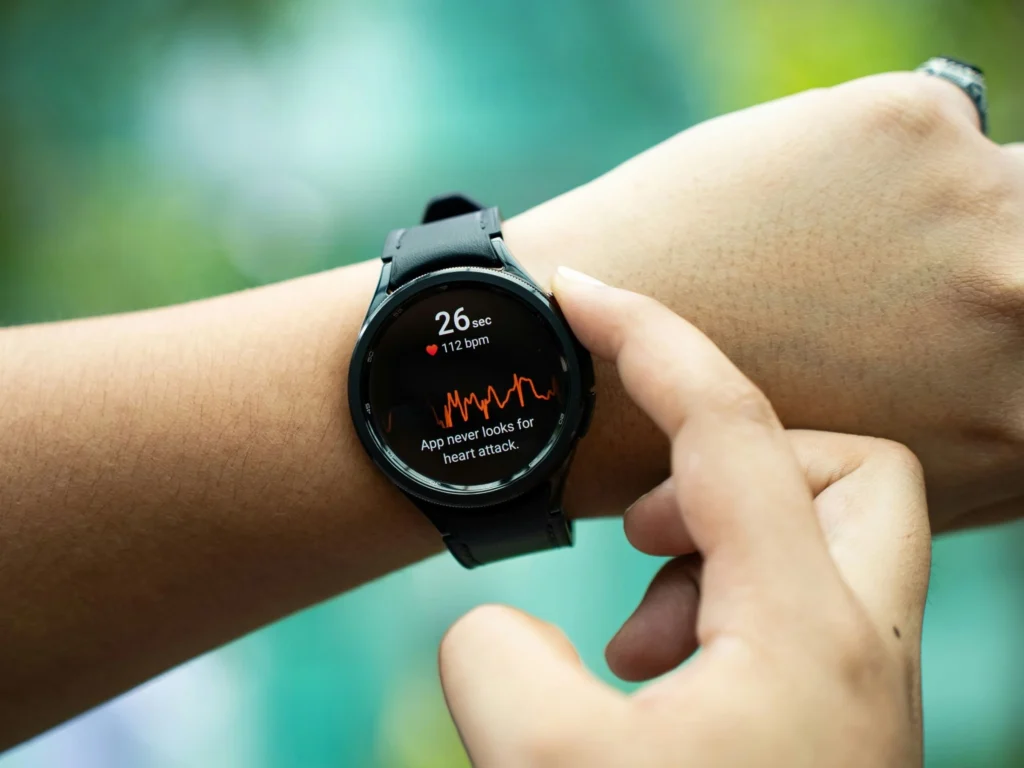
Samsung Research America has introduced two new AI foundation models aimed at analyzing wearable biosignal data, focusing primarily on smartwatches that monitor heart activity, sleep, and physical fitness. This innovation was unveiled during the Health Forum at Galaxy Unpacked in July 2026, where Samsung shared its vision for a future of preventative, personalized, and connected healthcare supported by health technology and strategic healthcare collaborations.
Sharanya Desai, the Head of Digital Health Algorithms at Samsung, emphasized the importance of this initiative, stating that it sets a technical foundation for continuous, precise, and efficient health insights through a robust health foundation model. The aim is to advance health foundation models that can process various biosignals efficiently, even on devices with limited resources.
Overview of Samsung’s Health AI Foundation Models
Samsung’s health foundation model employs self-supervised learning to discover features within unlabeled biosignal data. By pretraining on extensive health datasets, a single model can be adapted for tasks such as biosignal analysis, development of biomarkers, and predicting health issues.
The research focuses on two specific models that serve different purposes:
xMAE: This model, which stands for Physiology-Aware Masked Cross-Modal Reconstruction for Biosignal Representation Learning, learns the temporal connections among different biosignals.
HiMAE: Known as Hierarchical Masked Autoencoder, this model is designed to learn health patterns over multiple time scales utilizing wearable time-series data.
Both models were well-received in the academic community, with xMAE presented at the International Conference on Machine Learning and HiMAE featured at the International Conference on Learning Representations. These models aim to interpret physiological relationships and the temporal structure inherent in biosignal data, addressing unique elements of wearable-data analysis.
Functionalities of xMAE and HiMAE
xMAE connects two cardiac signals that are related but measured through different mechanisms. It reconstructs masked segments of an ECG signal using PPG data, thereby facilitating cardiovascular-health analysis with the continuous collection of PPG data, negating the need for manual ECG measurements. The model was trained on an extensive dataset of approximately 9,400 hours of ECG and PPG data and showed superior performance in numerous evaluation tasks, including predicting cardiovascular diseases and classifying sleep stages.
HiMAE, on the other hand, analyzes data at both short and long intervals. By employing multiple encoders, it separately processes different segments to adapt to the time scale required for specific health tasks, such as heart-rate monitoring or sleep pattern analysis. This model also exhibits high performance despite being smaller in size compared to existing models and can perform analyses on-device within milliseconds.
In summary, Samsung’s introduction of these AI models marks a significant advancement in the healthcare sector, providing a mechanism to extract vital health insights directly from wearable devices without relying on extensive server support.
For further exploration of similar advancements, check out Google AI’s health coach using Abbott glucose data.
Discover the pinnacle of WordPress auto blogging technology with AutomationTools.AI. Harnessing the power of cutting-edge AI algorithms, AutomationTools.AI emerges as the foremost solution for effortlessly curating content from RSS feeds directly to your WordPress platform. Say goodbye to manual content curation and hello to seamless automation, as this innovative tool streamlines the process, saving you time and effort. Stay ahead of the curve in content management and elevate your WordPress website with AutomationTools.AI—the ultimate choice for efficient, dynamic, and hassle-free auto blogging. Learn More
