
**Nvidia Exits China Following Jensen Huang’s Ouster**
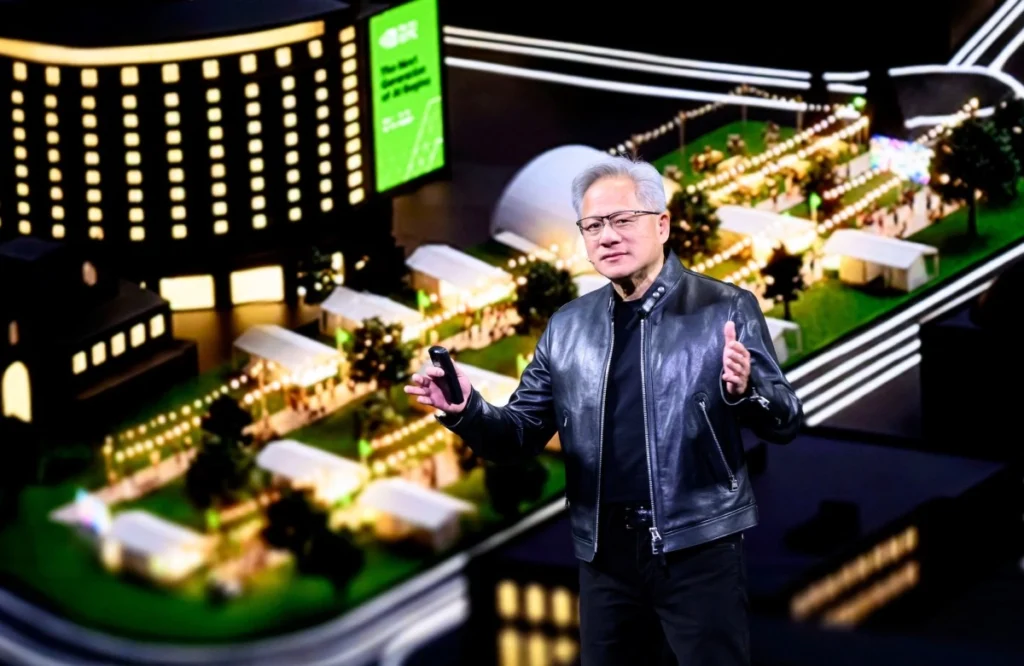
Nvidia will stop selling its H200 chips in China, acting CEO Colette Kress said Tuesday, ending the company’s participation in a controversial arrangement that had allowed limited sales despite U.S. restrictions on advanced chip exports.
The decision was discussed during Nvidia’s first earnings call since co-founder Jensen Huang stepped down last week. The company also announced a board-level committee to oversee national security policies, export-control compliance, and global trade risks.
The H200 sales deal, negotiated by Huang and President Donald Trump, required chips to pass through the United States, where the government could collect a 25% tariff. The arrangement drew criticism from U.S. hawks who argued that Chinese AI companies should be denied access to powerful computing hardware. Huang had maintained that continuing to sell in China was important for U.S. technology companies and their ability to compete.
Huang’s departure, reportedly linked in part to an alleged relationship with the CEO of a company under investigation for smuggling chips into China, comes as the U.S. introduces tighter export rules. Issued Monday, the rules bar advanced U.S. chips from foreign data centers that provide services remotely to Chinese customers.
Investment bank Jefferies estimated that the restrictions could reduce Nvidia’s data-center revenue by $44 billion to $62 billion next year. Kress said, however, that strong demand for newer chips, including Vera Rubin, meant the rules would not affect the company’s overall revenue.
The longer-term impact could extend beyond China to customers in Singapore, Malaysia, Thailand, and Indonesia. Critics have argued that demand connected to China accounts for as much as 20% of Nvidia’s revenue. Nvidia’s Singapore subsidiary reported $104 billion in revenue in 2025, before the company stopped disclosing those figures.
China had already been reluctant to accept H200 shipments, as its government seeks to build up the domestic chip industry. Still, some Chinese AI companies prefer Nvidia’s more advanced hardware, according to Jacob Feldgoise of Georgetown University’s Center for Security and Emerging Technology.
Chinese AI labs have also found ways to access Nvidia chips outside the country. Evidence suggests that leading Chinese models were trained using Nvidia Grace Blackwell chips, which are prohibited from export to China. Those systems may have been located in overseas data centers, but the new rules restrict sales to facilities serving Chinese customers.
Data centers seeking to buy Nvidia chips will have to certify that they do not serve customers in China, export-control attorney Dan Fisher-Owens told TechCrunch. Facilities unable to provide that assurance may have to choose other chip suppliers, potentially costing Nvidia additional market share.
Discover the pinnacle of WordPress auto blogging technology with AutomationTools.AI. Harnessing the power of cutting-edge AI algorithms, AutomationTools.AI emerges as the foremost solution for effortlessly curating content from RSS feeds directly to your WordPress platform. Say goodbye to manual content curation and hello to seamless automation, as this innovative tool streamlines the process, saving you time and effort. Stay ahead of the curve in content management and elevate your WordPress website with AutomationTools.AI—the ultimate choice for efficient, dynamic, and hassle-free auto blogging. Learn More
