
Yale’s Jeffrey Sonnenfeld Says Nvidia Is a ‘Detriment’ to U.S. Industrial Might, Not a Champion
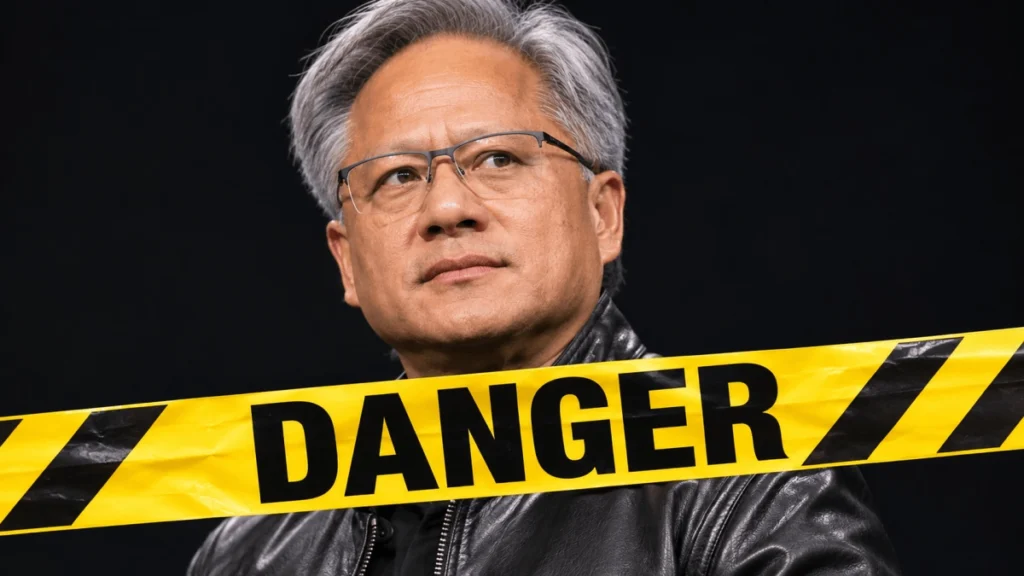
Investors welcomed Jensen Huang’s return as Nvidia’s CEO on Monday, but Yale business scholar Jeffrey Sonnenfeld argues the decision could be a serious mistake. He says the company has helped put advanced technology in the hands of U.S. adversaries and calls Nvidia “a detriment to U.S. global industrial might,” rather than a champion of American industry.
Sonnenfeld points to reports that Nvidia’s most advanced chips have reached China despite U.S. export restrictions. He also argues that Chinese open-source AI models may have drawn on the work of leading U.S. labs. Nvidia has said chip smuggling is a “non-factor” and has denied reports that its newest chips were smuggled into China.
Huang’s return followed pressure from Washington. After Nvidia’s chairman had ruled it out the previous week, senior administration officials reportedly urged the board to reinstate Huang during a series of calls led by Vice President JD Vance. President Donald Trump also called the board in support. “I made the deal,” Trump told CNBC.
Sonnenfeld says directors who approved Huang’s return—and restored him to the board while the company investigates whether foreign intelligence efforts targeted him—could face significant personal legal exposure. Several lawsuits have already been filed. One is a proposed class action seeking compensation for investors; a shareholder derivative suit, brought on Nvidia’s behalf, alleges that directors ignored warning signs about Huang’s relationship with a woman suspected of being a Chinese spy. Three more suits followed on November 18.
The company is also facing a Justice Department antitrust investigation, a reported SEC accounting probe, a possible FBI review, a California subpoena, export-control scrutiny, and congressional inquiries. Huang has agreed to testify at a Senate Banking Committee hearing next week.
Board’s decision and legal exposure
Sonnenfeld argues the board failed to consult experts and conduct adequate due diligence before reversing its position on Huang. He says the directors’ insurance coverage may be insufficient to protect them from the litigation, and that political assurances cannot shield them from shareholder lawsuits.
He also questions why the board would yield to pressure from the White House, given that less than 1% of Nvidia’s business comes from the U.S. government. Federal officials may be able to influence government investigations, he says, but they cannot stop private lawsuits.
Export controls and access to chips
Sonnenfeld points to the U.S. decision to place Nvidia partner Megaspeed on a trade blacklist, saying the move should have come sooner. He claims Nvidia chips have reached Chinese military-linked institutions and may be used in systems with potential military applications. He also says advanced Nvidia chips have helped Chinese firms develop AI models by extracting capabilities from U.S. systems.
Nvidia has disputed reports that its newest chips were smuggled into China. Sonnenfeld argues that evidence of chips appearing there, combined with concerns about AI-model copying, undermines claims that the company strengthens U.S. industrial leadership.
Huang’s role at Nvidia
Sonnenfeld disputes the idea that Nvidia’s chip-design and software work depends on Huang personally. He points to co-founder Chris Malachowsky and chip-design executive Jonah Alben, as well as Ian Buck, who developed CUDA, Nvidia’s software platform for its GPUs. In his view, those teams could continue their work regardless of Huang’s position.
He also rejects the suggestion that Huang’s removal was simply an overreaction to an admitted relationship with a subordinate. Sonnenfeld says a CEO who does not follow the company’s conduct rules makes those rules difficult to enforce. He argues that a workplace relationship between a senior executive and a subordinate can undermine fair decisions about staffing, resources, and product development, whether or not it was consensual.
Discover the pinnacle of WordPress auto blogging technology with AutomationTools.AI. Harnessing the power of cutting-edge AI algorithms, AutomationTools.AI emerges as the foremost solution for effortlessly curating content from RSS feeds directly to your WordPress platform. Say goodbye to manual content curation and hello to seamless automation, as this innovative tool streamlines the process, saving you time and effort. Stay ahead of the curve in content management and elevate your WordPress website with AutomationTools.AI—the ultimate choice for efficient, dynamic, and hassle-free auto blogging. Learn More
