
The AI Revolution: How Technology is Getting ‘Loopy’ and What It Means for the Future
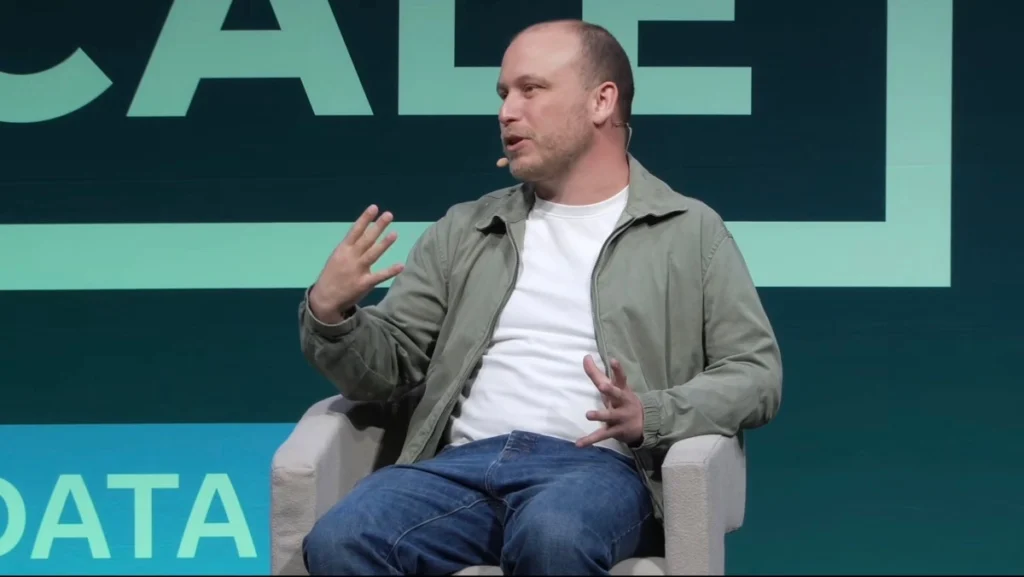
At Meta’s @Scale conference, Boris Cherny, the creator of Claude Code, sparked a discussion on the future of AI and the burgeoning concept of loops. When questioned whether loops are merely a trend or a significant advancement, Cherny affirmed their relevance with an emphatic "Yes."
He articulated the evolution within AI, where the initial phase involved programmers manually writing code. We then transitioned to agents that wrote the code, and now we’re entering a phase where these agents prompt each other to write code. Cherny compared the significance of loops in this new phase to the prior leap from traditional coding to agentic systems.
Cherny shared insights into how he utilizes loops in his work, noting that one agent focuses on improving code architecture while another identifies and unifies duplicated abstractions. These agents submit pull requests constantly and adapt to the ever-evolving code. This innovative approach empowers a cluster of agents to work tirelessly in the background, continuously optimizing code without direct human oversight, which poses an interesting challenge in trusting AI systems adequately.
The concept of agentic loops isn’t entirely new; recursive loops have long been part of computer science fundamentals. However, Cherny’s approach employs a non-deterministic logic, allowing a subagent to decide when to cease operations rather than relying on predetermined conditions. This builds on using AI to manage tasks, presenting the next logical step—having AI collaborate autonomously.
Nevertheless, the simplicity of agentic loops can be somewhat frustrating, with one example being the Ralph Loop, which helps to keep AI models focused on their goals by summarizing their completed work and validating their progress. This addresses the common issue of AI losing its direction over extended periods of operation.
Cherny’s discussion intersects neatly with a broader trend towards enhancing capabilities through increased computational resources. OpenAI’s Noam Brown highlighted that contemporary models can address virtually any problem if adequate computational power is applied. This method particularly benefits scenarios like optimizing codebases, allowing models to make ongoing incremental improvements with no fixed endpoint, as long as computational resources are available.
This model of operation, however, comes with considerable costs. The resource intensity of agentic AI running on loops can lead to exorbitant token consumption—far more than simpler Q&A models. Although this business model may benefit companies like Anthropic, other firms may find the financial implications unmanageable.
Despite potential expense, the effectiveness of agentic loops in solving complex problems, if properly implemented with oversight mechanisms, may lead to significant advancements that justify the costs.
Discover the pinnacle of WordPress auto blogging technology with AutomationTools.AI. Harnessing the power of cutting-edge AI algorithms, AutomationTools.AI emerges as the foremost solution for effortlessly curating content from RSS feeds directly to your WordPress platform. Say goodbye to manual content curation and hello to seamless automation, as this innovative tool streamlines the process, saving you time and effort. Stay ahead of the curve in content management and elevate your WordPress website with AutomationTools.AI—the ultimate choice for efficient, dynamic, and hassle-free auto blogging. Learn More
