
SAP Partners with ANYbotics to Accelerate Industrial Adoption of Physical AI
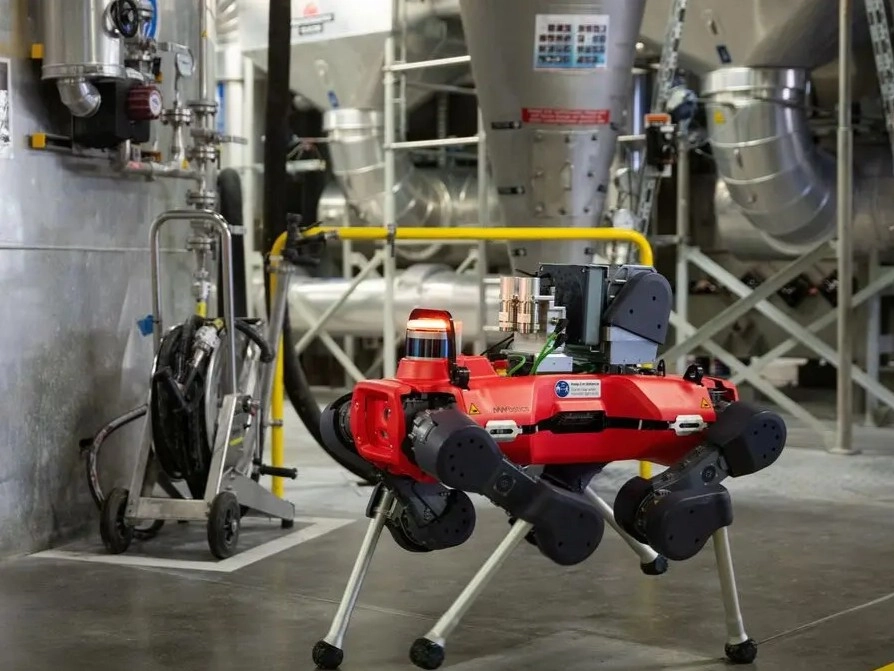
Heavy industry often involves hazardous environments that require human inspectors, leading to high costs and safety risks. To address these issues, Swiss robotics company ANYbotics has partnered with software firm SAP to integrate autonomous four-legged robots with SAP’s enterprise resource planning software. This integration transforms the robots from standalone machines into mobile data-collectors within an industrial IoT setup.
The collaboration represents a significant shift as it connects hardware innovation to traditional business processes. As part of its commitment to advancing these technologies, SAP is participating in this year’s AI & Big Data Expo North America in San Jose, California, aligning with complementary events like the IoT Tech Expo and the Intelligent Automation & Physical AI Summit.
In scenarios like chemical plants or offshore rigs, the costs associated with equipment breakdowns can be astronomical. Traditionally, human workers conduct inspections to identify problems early, but fatigue and the large scale of facilities can compromise safety and efficiency. In contrast, robots equipped with thermal, acoustic, and visual sensors can continuously monitor operations. By connecting these sensors with SAP, issues such as overheating pumps can trigger automated maintenance requests without delay.
Automation to Reduce Delays
The conventional inspection system involves two disjointed steps: detecting a problem and logging it. Often, a worker may note an issue and report it later, risking further damage before action is taken. The integration with ANYbotics streamlines this process; the robot’s onboard AI instantly analyzes data and communicates irregularities directly to SAP. If, for example, it detects an irregular motor frequency, it can trigger an immediate response, including parts requisition and scheduling maintenance.
This seamless data flow from floor to management allows for more precise machinery assessments based on objective metrics rather than subjective observations.
Implementing robots in industrial settings is not as straightforward as deploying software. Factories typically face challenges such as poor internet connectivity due to structural materials that hinder signal transmission. To address this, the solution leverages edge computing, with robots processing data locally to determine operational normals and only sending essential information back to SAP.
Given the often-erratic nature of factory networks, many organizations invest in private 5G networks, ensuring robust connectivity while protecting sensitive data. However, security is paramount; a robot equipped with cameras poses a potential security risk, necessitating zero-trust protocols to continuously verify its identity and manage its access to SAP data.
The implementation generates vast amounts of unstructured data. It’s crucial to manage this effectively; otherwise, maintenance teams could be overwhelmed by irrelevant alerts. Careful rule-setting for what constitutes a significant issue is essential to prevent data overload.
Middleware serves as the necessary conduit, converting the robot’s telemetry into a format that SAP can process. This ensures that only pertinent problems are flagged, opening the path for future machine learning applications aimed at predictive maintenance based on historical data.
A Thoughtful Deployment Strategy
Introducing robots into the workplace creates apprehension among staff, who might fear for their job security. Clear communication from management is vital to explain that these robots aim to safeguard workers by handling dangerous tasks, thereby allowing personnel to focus on analysis and repairs.
Successful implementation often requires retraining employees to navigate the SAP system and collaborate with robotic systems. Gradual rollouts are recommended, commencing with confined test areas with reliable internet to ensure compatibility and data accuracy.
The ongoing evaluation of the network capacity and security measures must keep pace as more robots are introduced and additional systems integrated, such as automated parts ordering.
By positioning these autonomous machines as integral components of their data architecture, companies can harness a wealth of information about their assets. However, achieving this requires meticulous attention to network infrastructure, data protocols, and workforce engagement.
See also: The rise of invisible IoT in enterprise operations
Discover the pinnacle of WordPress auto blogging technology with AutomationTools.AI. Harnessing the power of cutting-edge AI algorithms, AutomationTools.AI emerges as the foremost solution for effortlessly curating content from RSS feeds directly to your WordPress platform. Say goodbye to manual content curation and hello to seamless automation, as this innovative tool streamlines the process, saving you time and effort. Stay ahead of the curve in content management and elevate your WordPress website with AutomationTools.AI—the ultimate choice for efficient, dynamic, and hassle-free auto blogging. Learn More
