
Gartner Reveals Four Tiers of AI in Warehouse Automation: A Comprehensive Breakdown
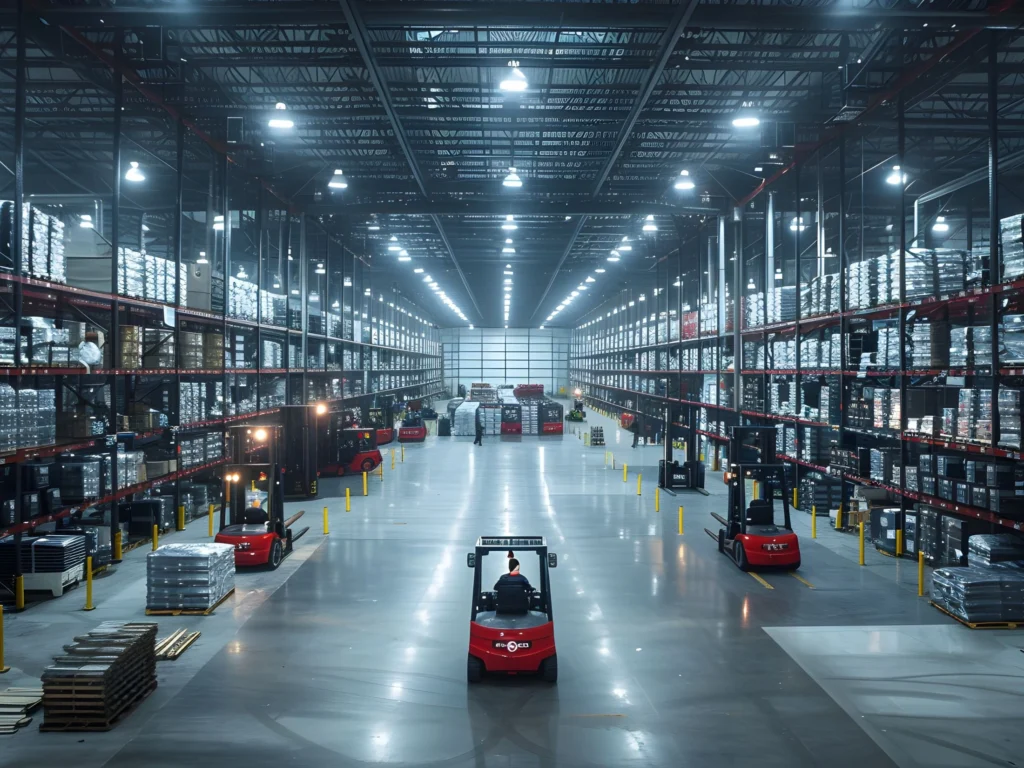
Gartner has published an analysis highlighting the evolution of warehouse automation into four distinct operational AI tiers. This shift reflects a growing trend among logistics operators as they transition from trial software models to implementing live systems in their facilities.
According to the research, there are three main pressures prompting this significant change within the logistics sector: a persistent shortage of workers, more accessible commercial software models requiring lower initial capital investments, and improvements in the reliability of algorithms and autonomous technology. These developments represent a new benchmark for adoption in logistics infrastructure.
The report categorizes these AI systems along two primary axes: the sophistication of intelligence and the orientation towards operational actions. Federica Stufano, a Senior Principal Analyst at Gartner, emphasizes that these four AI trends are interconnected, showcasing the evolution toward warehouses that are increasingly intelligent, adaptive, and resilient.
Key to enterprise deployment is the visibility into automated systems, which allows supervisors to comprehend the decision-making processes at play on the warehouse floor. It highlights the necessity for human staff to collaborate with automated tools to effectively address unique facility challenges.
Enhanced Optimization Models and Generative Planning
Recent advancements in mathematical modeling have outstripped outdated methodologies. Rather than relying on inflexible spreadsheets or basic decision trees, modern systems utilize real-time data to guide operations. These enhanced algorithms are integral to several core workflows, such as demand forecasting, shift scheduling, travel routing, and inventory placement. By continuously recalibrating inventory movements in response to changing order profiles, businesses can reduce operational costs and improve asset productivity while ensuring compliance through robust audit trails.
Machine learning technologies are capable of interpreting not only structured data but also unstructured information from within the facility. This includes maintenance logs, delivery documents, and incident reports, which help generate dynamic operational documentation. For instance, software agents can create instantaneous standard operating procedures and provide updated picking instructions to mitigate delays caused by supply chain interruptions.
Semi-autonomous AI Agents and Warehouse Automation
In handling complex workflows, autonomous software agents combine analytical capabilities with human oversight. These agents can manage active floor queues, reassign tasks as necessary, and optimize the distribution of machinery across loading areas. Importantly, while managers have the authority to make final decisions on significant actions, the software suggests operational sequences to align workflow with real-time needs.
This blend of human management and machine automation enhances operational efficiency, mitigates workflow disruptions, and speeds up reactions to supply chain challenges while managing high-value operations.
Integrating machine learning with industrial robotics and spatial sensors allows for a higher level of automation within physical warehouses. Robots now perform tasks such as picking, packing, sorting, and transporting parcels with a high degree of accuracy, resulting in improved item handling and fewer injuries during palletization efforts.
Stufano advises that supply chain leaders take a measured approach to implement AI in warehousing. Focusing first on established use cases—like labor forecasting and inventory optimization—allows organizations to gradually adopt more advanced technologies as their workforce becomes more proficient with these systems.
To learn more about physical AI applications, consider attending the Physical AI Expo hosted in Amsterdam, London, and North America.
Discover the pinnacle of WordPress auto blogging technology with AutomationTools.AI. Harnessing the power of cutting-edge AI algorithms, AutomationTools.AI emerges as the foremost solution for effortlessly curating content from RSS feeds directly to your WordPress platform. Say goodbye to manual content curation and hello to seamless automation, as this innovative tool streamlines the process, saving you time and effort. Stay ahead of the curve in content management and elevate your WordPress website with AutomationTools.AI—the ultimate choice for efficient, dynamic, and hassle-free auto blogging. Learn More
