
Optimizing Supply Chain Allocation: How Palantir Foundry and cuOpt Leverage NVIDIA Technology
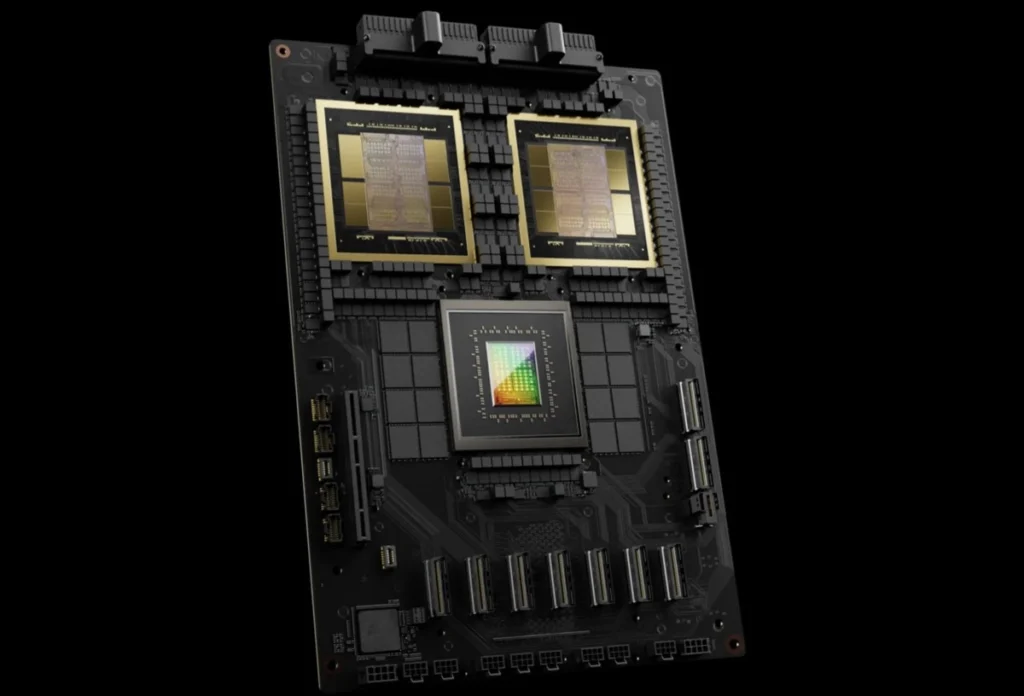
NVIDIA is leveraging Palantir Foundry and cuOpt to enhance its hardware supply chain allocations across global manufacturing sites. The focus is on improving operational delivery from the point of wafer output to the first token, with the process subdivided into time-to-rack and time-to-token intervals.
Managing Component Flows
With advancements in hardware scaling, NVIDIA faces increasing supply constraints. For instance, the Grace Blackwell NVL72 rack comprises 18 compute trays, requiring specific quantities of Grace CPUs, Blackwell GPUs, and memory packages, all sourced from a network of suppliers, OEMs, and contract partners. Notably, the Vera Rubin architecture’s supply chain is designed to be even larger, emphasizing the need for synchronized assembly processes reliant on timely component arrivals from various channels.
NVIDIA’s logistics strategy extends over two-quarter planning horizons, addressing part availability, throughput limits, and customer fulfillment timelines on a weekly basis.
Optimizing with cuOpt
NVIDIA’s operations team developed a command center termed ‘Digital Supply Chain Intelligence’ powered by Palantir Foundry. This platform models facilities, supplier commitments, and production targets as interconnected objects. To coordinate logistics effectively, cuOpt acts as an open-source library that formulates distribution into a mixed-integer linear program aimed at minimizing the "Time of Ownership" – the duration materials are held before sub-assemblies are completed.
The tool not only generates delivery schedules but also measures factory capabilities against raw material availability.
Enhancing Decisions with Nemotron
Recognizing the limitations of mathematical optimization, NVIDIA sought to incorporate qualitative operational factors observed by human planners. To achieve this, the company fine-tuned the Nemotron 3.5 Lightning model, training it on historical data, including unstructured information such as supplier communications and regional forecasts, while using tools from the NeMo framework to maintain data privacy and balance training scenarios.
Performance Metrics and Future Use
In evaluations against historical allocation data, the tuned Nemotron model achieved a decision accuracy of 86.7%, surpassing both its predecessor models. Fine-tuning processes demonstrated notable improvements in allocation choices, though challenges remain for forecasting production risks over more extended periods.
Operational adjustments and outputs are continuously integrated back into the Palantir Ontology, building a repository for future reinforcement learning routines aimed at refining allocation precision and compliance.
For further reading on NVIDIA’s approach to optimizing supply chain logistics, refer to their platforms:
Discover the pinnacle of WordPress auto blogging technology with AutomationTools.AI. Harnessing the power of cutting-edge AI algorithms, AutomationTools.AI emerges as the foremost solution for effortlessly curating content from RSS feeds directly to your WordPress platform. Say goodbye to manual content curation and hello to seamless automation, as this innovative tool streamlines the process, saving you time and effort. Stay ahead of the curve in content management and elevate your WordPress website with AutomationTools.AI—the ultimate choice for efficient, dynamic, and hassle-free auto blogging. Learn More
